“After review, your account presents a high level of risk.”
We got that email 25 times. Stripe. PayPal. Shopify Payments. Different stores, different products, all digital, all shut down for the same three words: high risk. This is the story of what we learned getting banned over and over, and why it turned into a platform.
It worked, and that was the problem
We started selling online in 2019. Digital goods, the kind of products risk departments don’t like. The advice everyone gives is the same: just use Stripe, just use PayPal, put it on Shopify. So we did. And it worked, which turned out to be exactly the issue.
The better a store did, the bigger the target on it. Three weeks into one, the dashboard simply said deactivated. No chargebacks, no warning, no human on the other end, just a copy-paste reply quoting a policy section nobody would explain. We opened another under a different entity. Six weeks, gone. PayPal limited the next one. Shopify Payments closed a store mid-sale. By somewhere around the twelfth ban, we had stopped reading the emails properly.
Then it clicked
Around the time the count got embarrassing, the pattern finally made sense. They were never really reviewing us. Mainstream processors sort merchants by category. If your vertical carries elevated chargebacks anywhere on the network, you inherit that risk score even with spotless numbers of your own. You are not a business being evaluated. You are a bucket being avoided.
And they share the verdict. A Mastercard database called MATCH records merchants whose accounts were terminated for cause, and acquiring banks check it during underwriting. Entries last five years with effectively no appeal. Get listed once and most processors won’t touch you until the clock runs out.
You don’t get banned by one processor. Through the shared system, you can get shut out of most of them at once, over a flag you never get to see.
The reserve is what actually hurts
The bans were exhausting. The held money was the real damage. Processors can sit on your balance for up to 180 days as a reserve, money from customers who already paid and never disputed anything. We had roughly 30k locked across accounts at one point. Some of it never came back.
We want to be fair, because the obvious objection is true: fraud is real, holds exist for a reason, and processors absorb genuine losses. They are not wrong to protect themselves. But there was no fraud and no chargeback spike on these accounts. There was a number we couldn’t see, and the moment we tripped it we were disposable, with our cash still sitting in their building.
Why we stopped asking for permission
Around month seven we gave up on fitting into systems that were built to reject us and started talking to acquirers directly. It took forever. But the idea underneath was simple: what if the platform underwrote the category upfront, acted as the merchant of record so it absorbed the regulatory burden, and let sellers just plug in and get paid?
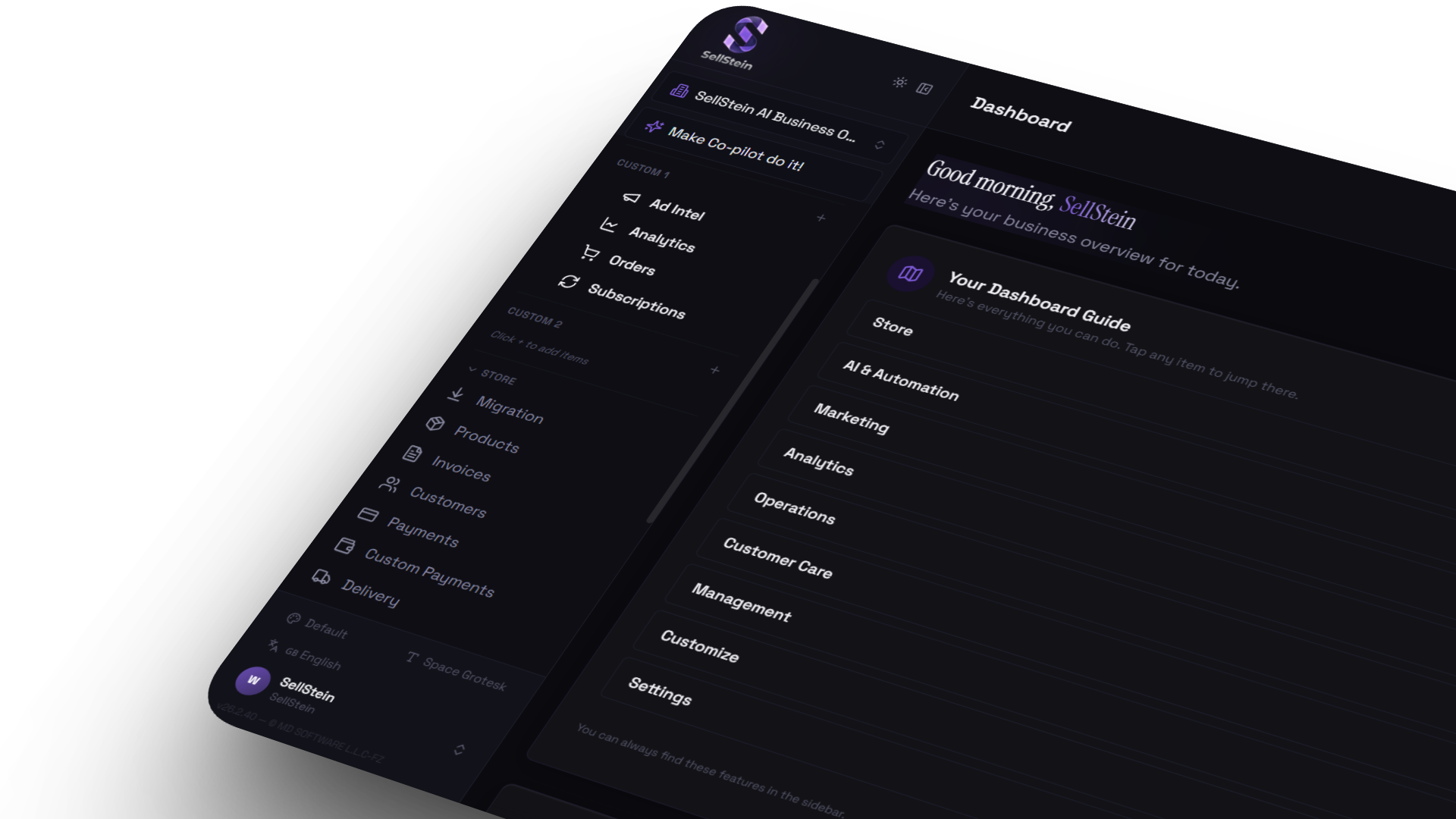
That became SellStein. An ecommerce platform built for the merchants other systems freeze, ban, or ignore. Card processing at the standard 2.9% + $0.25, a platform fee of 5% on the free plan that drops to 0% on any paid plan, with store management, AI automation, and analytics in one place. No invented reserves. No black-box decisions. If something ever needs attention on your account, you hear from a person first, with a named reason and a chance to fix it.
What a modern ecommerce platform should actually do
Getting banned 25 times clarified what matters in a platform, and it is not the theme picker. It is the boring, load-bearing things:
- Payments that assume your category is allowed to exist. Underwriting built around flagged verticals, not against them.
- Your money treated as yours. Payouts on a visible schedule, not frozen on a whim.
- Decisions you can see. A real reason and notice before anything happens to your account.
- Everything in one system. Store, payments, marketing, and analytics, so you aren’t stitching together five tools and five points of failure.
- A clean exit. Your data and store are portable. A platform that locks you in is just a different kind of hostage situation.
The honest close
We’re early, and built by a founder who got burned rather than a committee, which means you get a real person who answers and a platform that’s still rough in places. We would rather tell you that than pretend.
If you’ve been getting the high-risk email yourself, the most useful thing we can tell you is free: don’t run on one processor, sweep your balance to your bank constantly, read the hold terms before you sign, and keep chargebacks obsessively low. Do that and you may never have our morning. If you want to understand exactly why these bans happen, we broke it all down in our guide to high-risk payment processors and the MATCH list. And if you’re ready to stop asking permission to run your business, SellStein is live.